Candied Yams
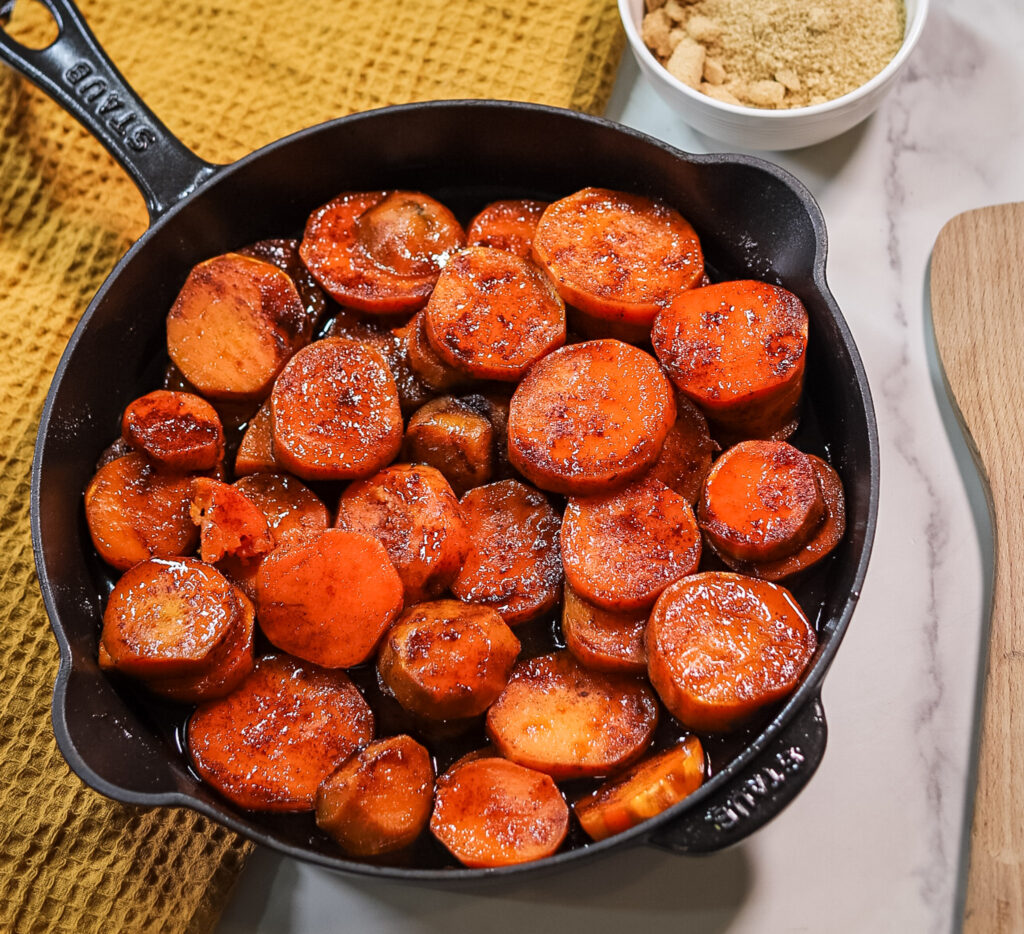
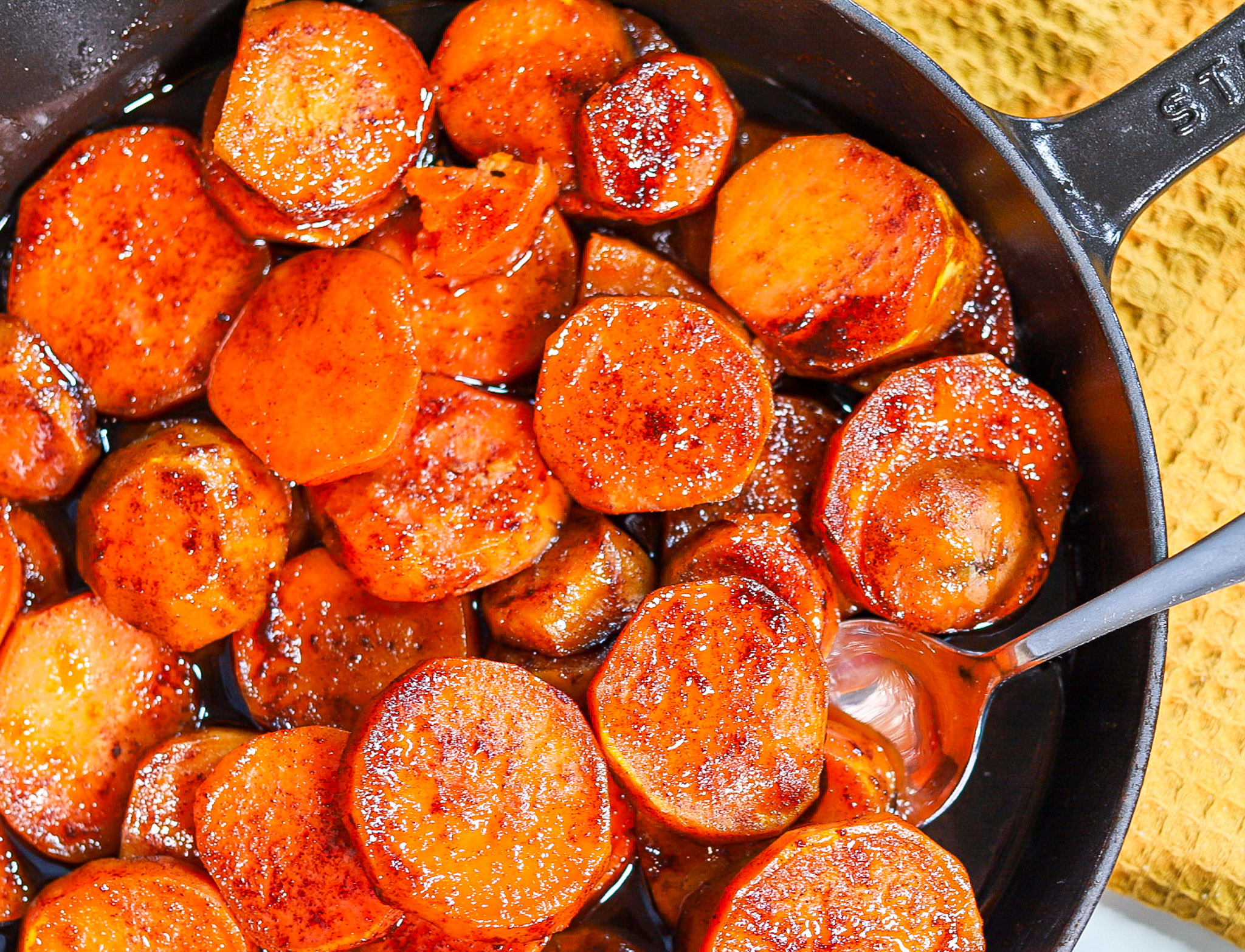
If there’s one dish that instantly brings comfort and nostalgia to the table, it’s Candied Yams. Tender sweet potatoes baked in a buttery, brown sugar glaze with warm spices and a hint of citrus — this dish is pure Southern soul. My version takes things up a notch by adding the juice of half an orange, giving each bite a subtle brightness that perfectly balances the sweetness.
If you love holiday sides as much as I do, then you’ll definitely want to check out my Seafood Dressing or Chicken Broccoli Rice Casserole next!
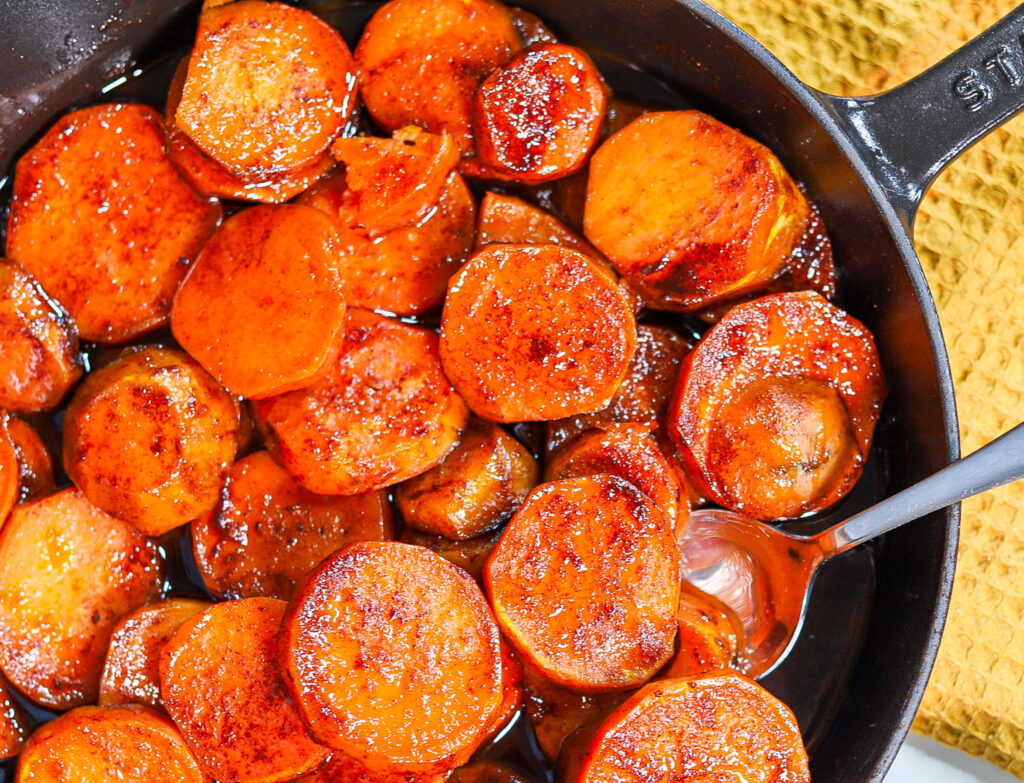
Whether you’re serving these Candied Yams at Sunday dinner, a holiday feast, or just because you want something that tastes like home, my recipe delivers that rich, caramelized flavor that never fails to impress.
Really love my recipes? You will enjoy this Creole Crawfish Boudin Balls and my Easy Jambalaya Recipe !
What Are Candied Yams?
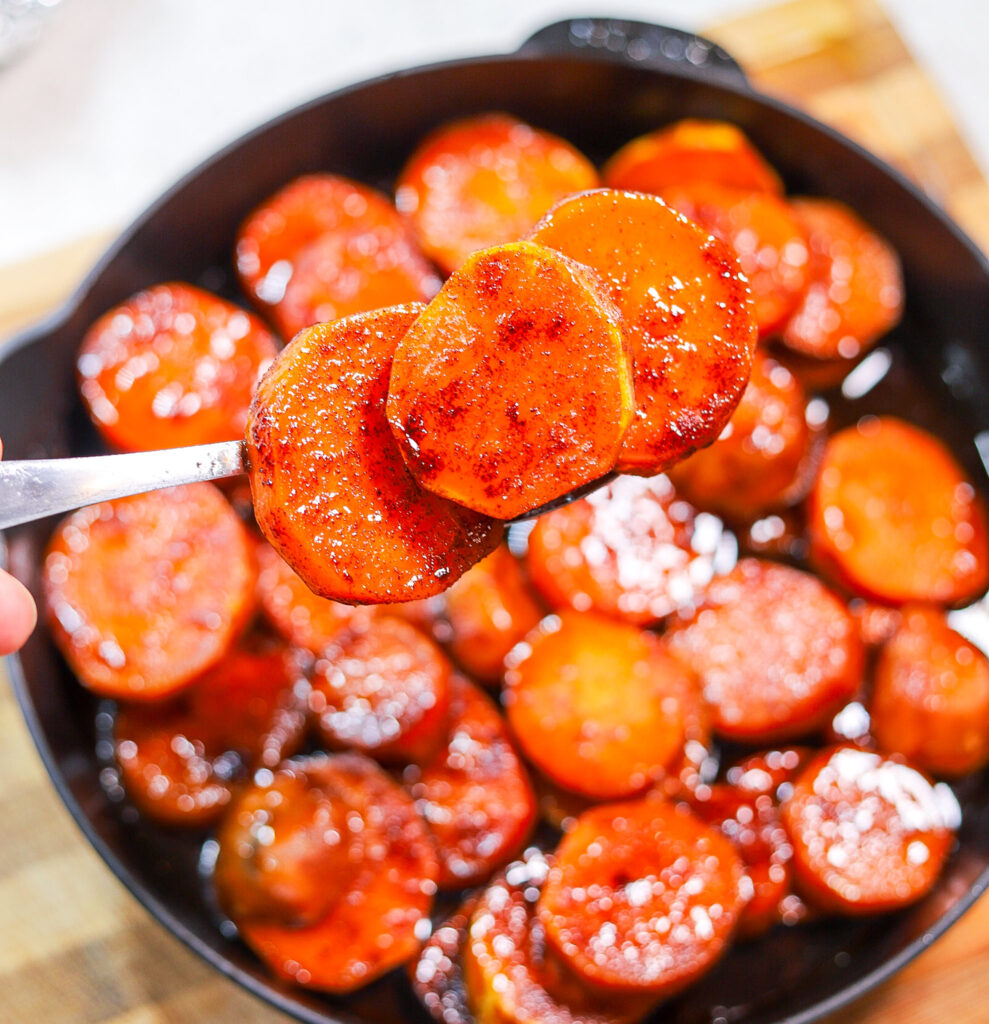
Despite the name, candied yams are actually made with sweet potatoes — a Southern tradition that dates back generations. The dish gets its “candied” name from the buttery brown sugar glaze that coats the sweet potatoes as they bake, creating a luscious syrup that caramelizes beautifully in the oven.
The result? Soft, melt-in-your-mouth sweet potatoes with a sticky, sweet-spiced glaze that’s downright irresistible. They’re the perfect combination of savory, sweet, and cozy.
Ingredients You’ll Need
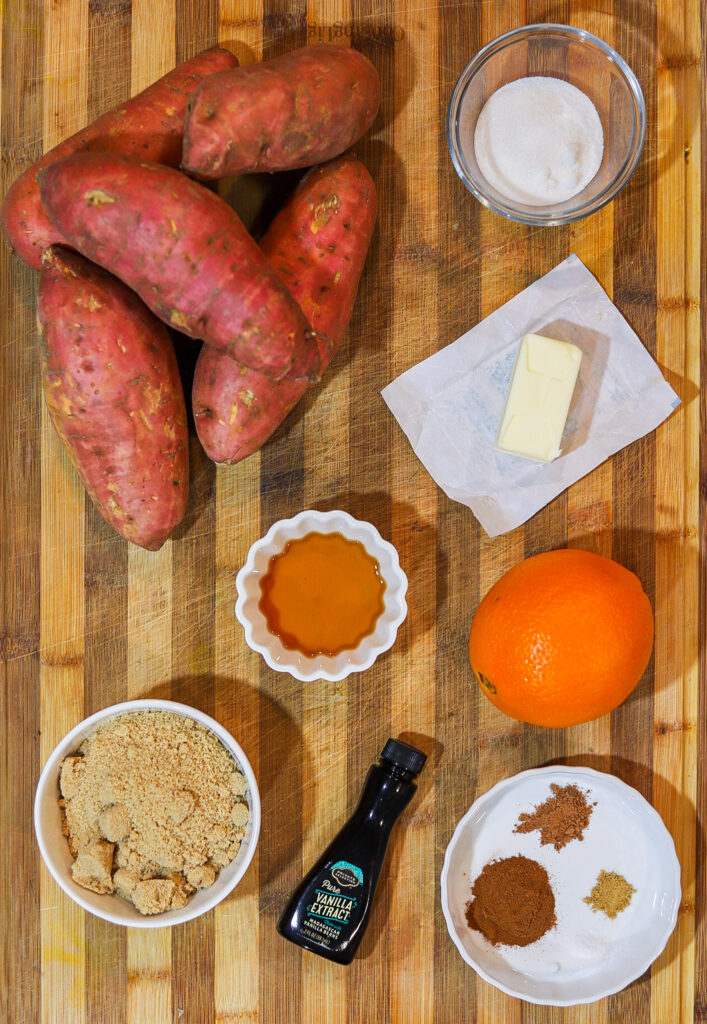
First, and most importantly, to create this delicious candied yams recipe, gather the following ingredients:
- Brown Sugar: Adds depth, molasses flavor, and creates that classic syrupy glaze.
- Granulated Sugar: Helps the glaze caramelize and adds structure to the syrup.
- Butter: Brings richness and makes the glaze silky smooth.
- Maple Syrup: Adds a subtle, natural sweetness with hints of caramel and woodsy flavor.
- Cinnamon & Nutmeg: Classic warming spices that make every bite taste like home.
- Ground Ginger: A pinch of spice that enhances the overall warmth without overpowering.
- Vanilla Extract: Smooths out the sweetness and rounds out the flavors.
- Kosher Salt: Balances the sweetness and deepens every flavor.
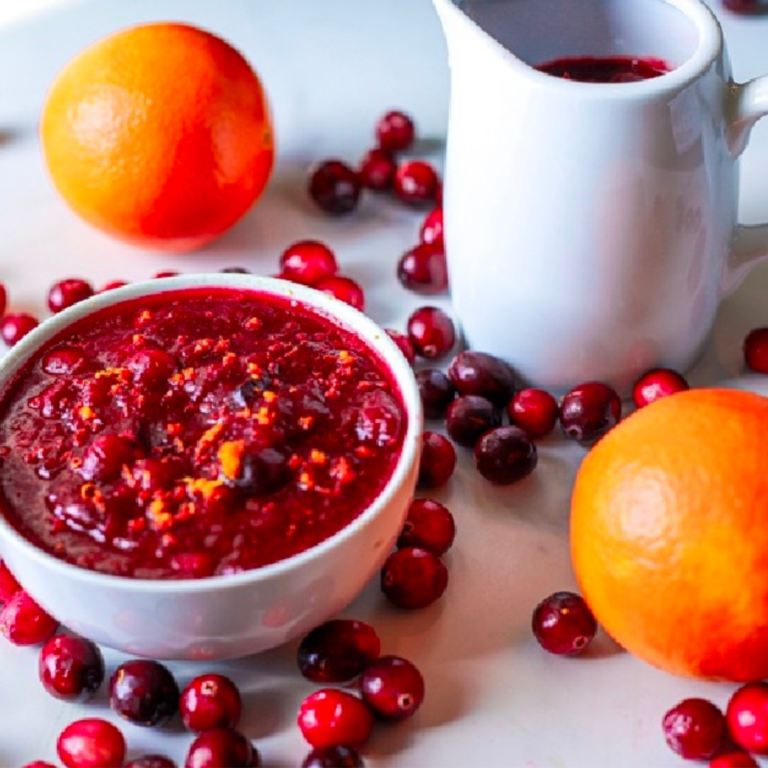
- Juice of ½ Orange: My twist — a bright citrus note that cuts through the sugar for perfect balance.
Why You’ll Love This Candied Yams Recipe
- Everyday easy, holiday worthy: Simple enough for a weeknight dinner but impressive enough for Thanksgiving, Christmas, or Sunday supper.
- Perfectly balanced sweetness: The brown sugar and maple syrup bring warmth, while the fresh orange juice cuts through with just the right amount of brightness.
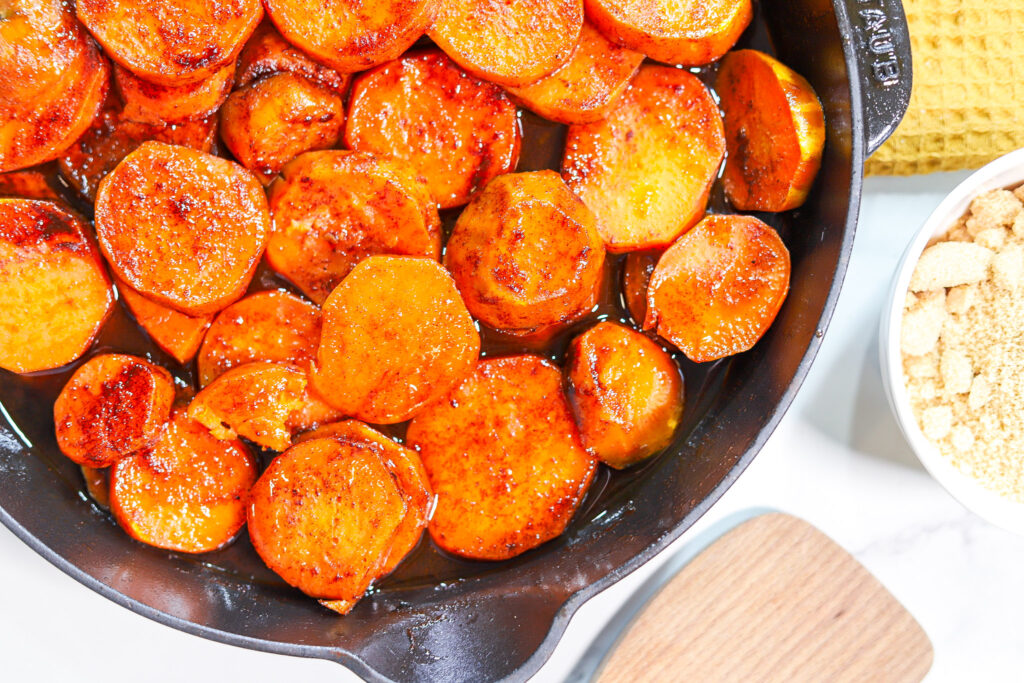
- Caramelized glaze magic: Baking covered first keeps the potatoes tender; uncovering them at the end gives that golden, sticky finish.
- Southern comfort with a twist: This recipe honors traditional soul-food flavors while adding a touch of citrus that keeps things fresh and elevated.
How to Make Candied Yams
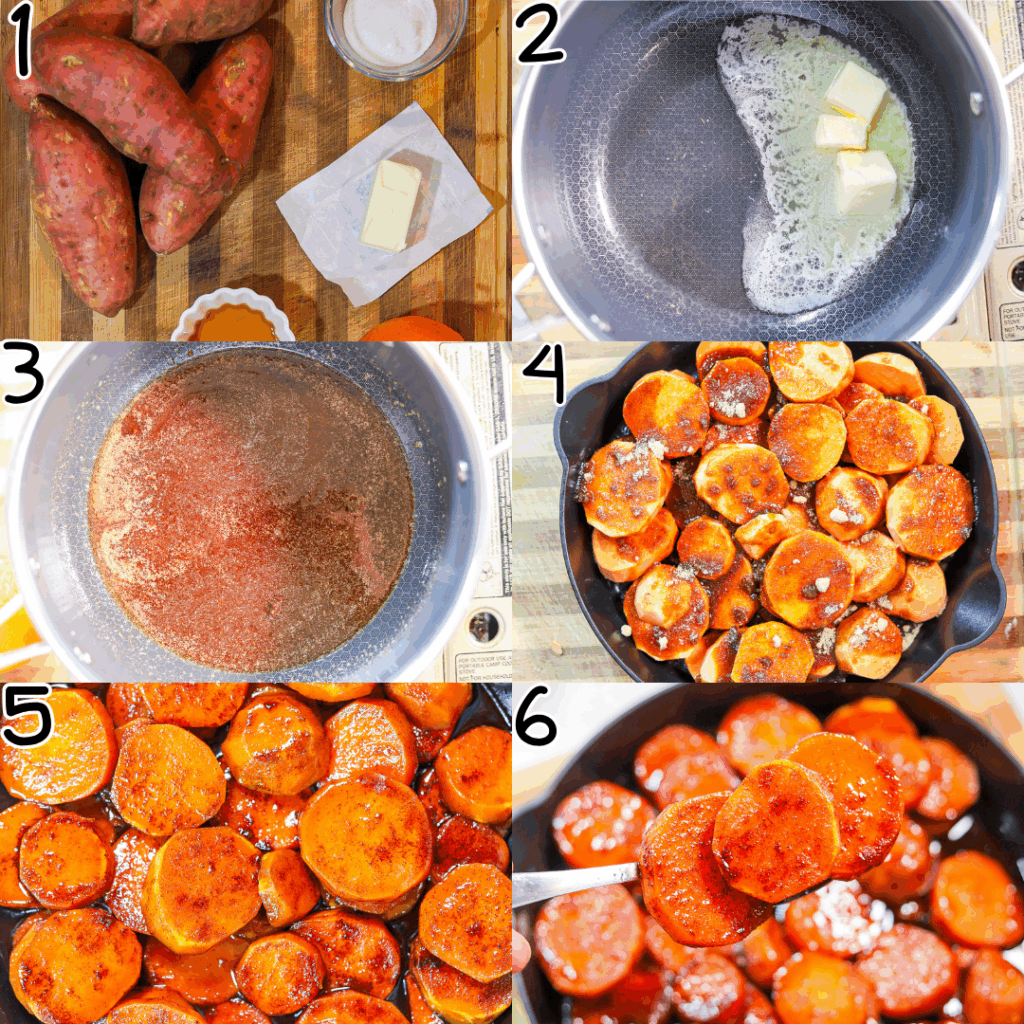
1. Prep the sweet potatoes: Peel and slice into ½-inch rounds or wedges.
2. Make the glaze: In a small saucepan, melt butter and whisk in both sugars, maple syrup, and spices. Cook until smooth and glossy, then stir in vanilla and orange juice.
3. Coat and bake: Arrange sweet potatoes in a baking dish, pour the glaze over top, and cover with foil.
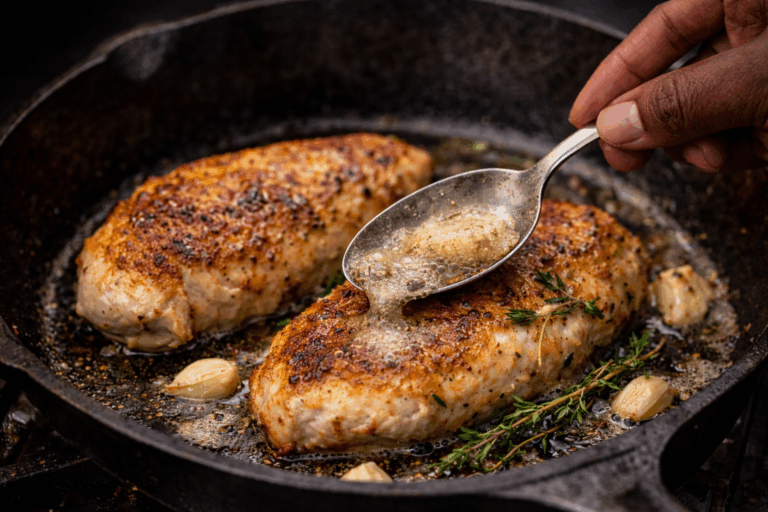
4. Bake until tender: Bake at 350°F for about 45 minutes. Remove foil, baste the potatoes with the glaze, and bake another 10–15 minutes until caramelized.
5. Serve and enjoy: Spoon that sweet, syrupy glaze over the top and serve warm.
Recipe Tips
Uniform slices cook evenly. Keep your sweet potato pieces around ½-inch thick for the perfect texture.
Don’t skip the foil. Covering traps steam and softens the potatoes before the glaze caramelizes.
Add your twist. Sprinkle in chopped pecans for crunch, or finish with toasted marshmallows for that nostalgic holiday touch.
Make ahead friendly. Assemble everything the night before, refrigerate, and bake the next day — just add 10 extra minutes of bake time.
Don’t overbake. You want fork-tender slices that hold their shape, not mush.
FAQ:
Are candied yams and sweet potatoes the same thing?
Technically, most “candied yam” recipes use sweet potatoes — true yams are starchier and less sweet. In the U.S., the names are often used interchangeably.
Can I make candied yams ahead of time?
Yes! You can prepare them up to a day in advance and store covered in the fridge. Reheat at 350°F for 20–25 minutes before serving.
Can I use canned yams?
You can, but the flavor and texture are best with fresh sweet potatoes. If using canned, reduce bake time and glaze to avoid over-softening.
Do I need both brown and white sugar?
Yes — the mix creates depth. Brown sugar gives that rich molasses flavor, while white sugar helps the glaze caramelize evenly.
I hope you enjoy this Candied Yams recipe! Make sure to tag me on Instagram, TikTok, or Facebook when you make this recipe! I want to see your creation and give you a shoutout!
Candied Yams
Ingredients
Equipment
Method
- Preheat oven to 350 °F.
- In a small saucepan over medium-low heat, melt the butter. Stir in brown sugar, granulated sugar, cinnamon, nutmeg, salt, ginger, and maple syrup. Stir and cook until the mixture is fully combined
- Remove from heat. Stir in the vanilla extract and the juice of half an orange. Mix well so the citrus integrates into the glaze.
- Place the sliced sweet potatoes into the prepared cast iron or 8 × 11 baking dish (a little overlap is cool). Pour the glaze over the sweet potatoes, and top with a little more brown sugar.
- Cover the dish with foil and bake for ~45 minutes. At the 45-minute mark, check for doneness (pierce a slice with a fork: it should be tender but not mushy). If not yet tender, continue baking in 5-minute increments.
- Once tender, remove foil. Baste the sweet potatoes with the glaze from the bottom of the dish. Bake for an additional 5–10 minutes.
- Serve hot. The sauce will continue to thicken as it cools.
Video
Notes
- Stir in or top with chopped pecans or walnuts for some texture
- Store leftovers in an airtight container in the fridge for up to 3 days.
- You want your sweet potatoes to be tender but not mushy.
- The juice of half an orange adds brightness and subtle acidity which cuts through the sweetness and enriches the glaze complexity.