Ingredients
Method
Prepare the Lobster
- Using kitchen shears or a sharp knife, carefully cut each lobster tail in half lengthwise, keeping the meat inside the shell. Pat dry with paper towels and lightly season the exposed meat with salt, pepper, and Cajun seasoning if desired.
Sear the Lobster
- Heat a large skillet over medium heat. Add the butter and olive oil. Once the butter is melted and bubbling, place the lobster tails meat-side down in the skillet.
- Cook for approximately 3–4 minutes, then flip and continue cooking for another 2–3 minutes, depending on the size of the tails, until the lobster is opaque and reaches an internal temperature of 145°F.
- Remove the lobster tails from the skillet and allow them to cool slightly.
Remove the Lobster Meat
- Carefully remove the lobster meat from the shells. Roughly chop the meat into bite-sized pieces and set aside. Reserve the shells to flavor the pasta cooking liquid.
Build the Sauce
- Using the same skillet with the lobster butter and drippings, add additional butter if needed.
- Add the diced shallot and sauté for 2–3 minutes until softened. Stir in the garlic and cook for another 30 seconds until fragrant.
- Add the tomato paste and cook for 1–2 minutes, stirring frequently, until it darkens slightly and begins to caramelize.
Deglaze the Pan
- Pour in the white wine or seafood stock, scraping the bottom of the skillet to release all those flavorful browned bits.
- Allow the liquid to simmer and reduce by approximately half.
Make the Cream Sauce
- Reduce the heat to medium-low and pour in the heavy cream. Stir until the tomato paste is fully incorporated and the sauce is smooth.
- Allow the sauce to gently simmer for 5–7 minutes, stirring occasionally, until slightly thickened. Avoid boiling the cream.
Cook the Pasta
- While the sauce simmers, bring the seafood stock and enough additional water to cover the pasta to a boil in a large pot.
- Add the reserved lobster shells and allow them to simmer in the liquid for a few minutes to release their flavor.
- Add the fettuccine and cook according to package directions until al dente, stirring occasionally.
- Before draining, reserve at least 1 cup of the pasta cooking liquid. Remove and discard the lobster shells.
Finish the Sauce
- Reduce the heat beneath the sauce to low.
- Gradually stir in the freshly grated Parmesan cheese until melted and incorporated.
- Add approximately ½ cup of reserved pasta water, stirring until the sauce reaches a silky, creamy consistency.
- Taste and adjust the seasoning with salt and freshly cracked black pepper.
Add the Lobster and Pasta
- Gently fold the chopped lobster meat into the sauce and allow it to warm through for 1–2 minutes.
- Add the cooked fettuccine directly to the skillet and toss until every strand is coated in the creamy lobster sauce.
- Add additional pasta water, a splash at a time, if needed to loosen the sauce.
Serve
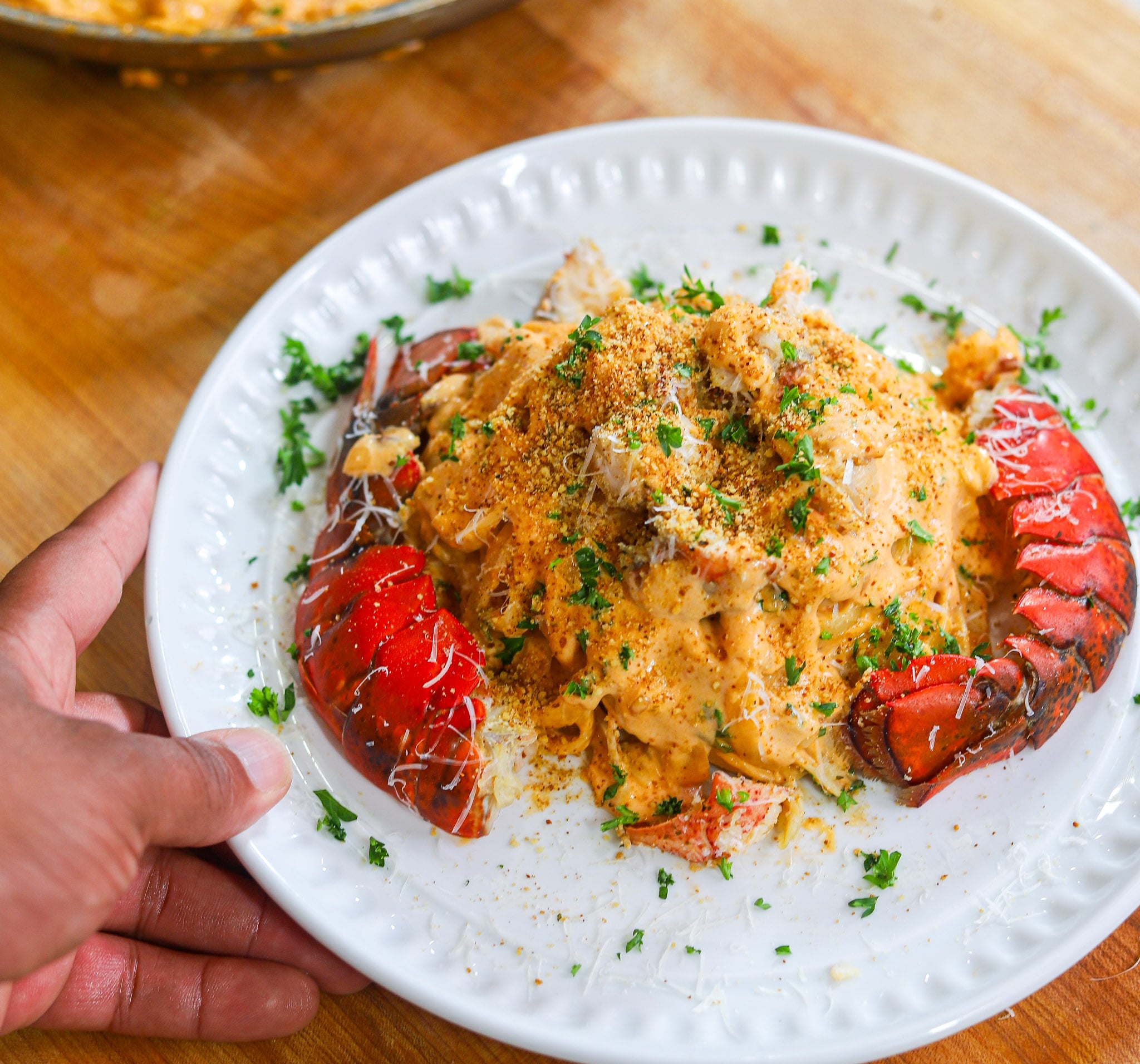
- Plate the creamy lobster fettuccine immediately. Garnish with freshly grated Parmesan, chopped parsley, and freshly cracked black pepper.
- Finish with a squeeze of fresh lemon juice if desired.
Notes
Don't overcook the lobster. Lobster cooks quickly, and overcooking can make the meat tough and rubbery. Since the lobster will be added back to the sauce, cook it just until done during the initial sear.
Save those lobster shells! Simmering the shells in seafood stock adds another layer of lobster flavor to the pasta.
Cook your tomato paste. Allowing the tomato paste to caramelize slightly before adding liquid deepens the flavor and gives the sauce a beautiful color.
Use freshly grated Parmesan. Pre-shredded cheese often contains anti-caking ingredients that can prevent it from melting smoothly.
Don't skip the pasta water. The starch in the cooking liquid helps the sauce cling to the noodles and creates a silky finish.
Keep the heat low when adding cheese. High heat can cause Parmesan to clump or separate.
Serve immediately. Cream-based pasta sauces are best enjoyed fresh while they're silky and smooth.