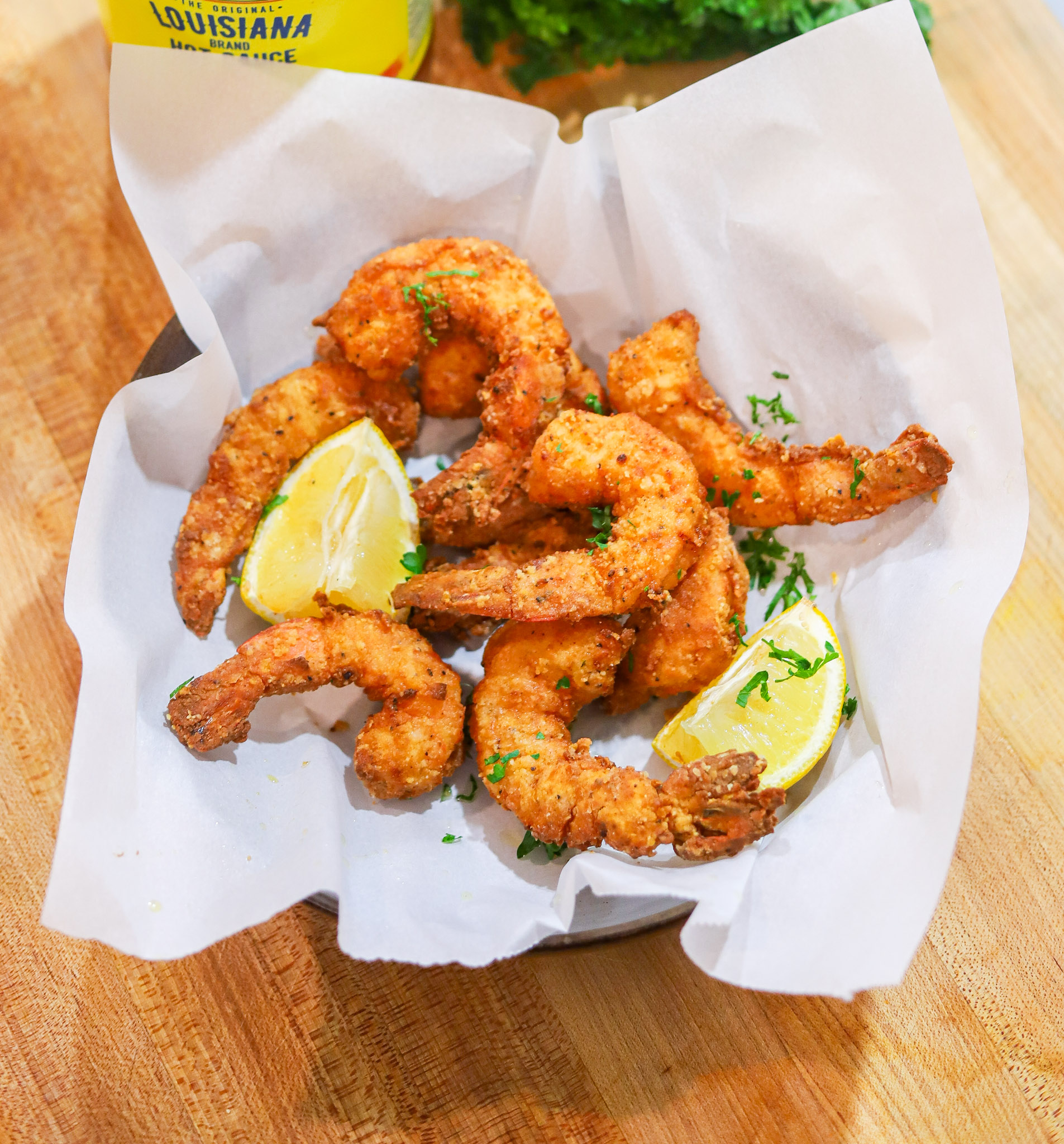
Ingredients
Equipment
Method
Season the Shrimp
- Pat the shrimp dry with paper towels and place them in a large mixing bowl.
- Season with garlic powder, onion powder, paprika, Cajun or Creole seasoning, salt, and black pepper. Toss until the shrimp are evenly coated.
Make the Buttermilk Mixture
- In a separate bowl, whisk together the buttermilk, egg, and hot sauce until combined.
- Pour the mixture over the seasoned shrimp and toss until completely coated.
- Cover and refrigerate for about 30 minutes. Avoid marinating the shrimp for several hours, as shrimp don't need a long soak.
Make the Dredge
- In a large shallow dish, combine the flour, cornstarch, garlic powder, onion powder, paprika, Cajun or Creole seasoning, salt, and black pepper.
- Whisk until all the seasonings are evenly distributed.
Heat the Oil
- Pour about 2–3 inches of frying oil into a Dutch oven or deep, heavy-bottomed skillet.
- Heat the oil to 350°F.
- Place a wire rack over a sheet pan and set it near your frying station.
Dredge the Shrimp
- Remove the shrimp from the buttermilk mixture one at a time, allowing the excess liquid to drip off.
- Transfer directly into the seasoned flour mixture.
- Press and toss the dredge onto each shrimp until thoroughly coated. For an extra-craggy crust, drizzle a tablespoon or two of the buttermilk mixture into the flour and toss with your fingers before dredging the shrimp. Those small clumps create extra crispy pieces when fried.
- Shake off any excess flour.
Fry Until Golden & Crispy
- Working in batches, carefully lower the shrimp into the hot oil.
- Fry for approximately 2–3 minutes, turning as needed, until golden brown, crispy, and cooked through.
- Avoid overcrowding the pot, which can lower the oil temperature and make the shrimp greasy instead of crispy.
- Allow the oil to return to 350°F between batches.
Drain & Finish
- Transfer the fried shrimp to the prepared wire rack.
- While they're still hot, finish with a light squeeze of fresh lemon juice, a few dashes of hot sauce, and a sprinkle of fresh parsley.
- Serve immediately with lemon wedges and your favorite dipping sauce.
Video
Notes
Cornstarch is the key to extra crunch.
Using both flour and cornstarch creates a lighter, crispier coating than flour alone. Keep your oil around 350°F.
If the oil gets too cool, the coating will absorb excess oil. If it gets too hot, the exterior can brown before the shrimp are properly cooked. Don't overcrowd the fryer.
Fry the shrimp in small batches so the oil temperature stays consistent. Use large or jumbo shrimp.
Larger shrimp stay juicy during frying and give you a better ratio of crispy coating to tender shrimp. Season every layer.
Seasoning the shrimp, buttermilk mixture, and flour dredge gives you flavorful shrimp all the way through rather than relying solely on the crust. Drain on a wire rack.
A wire rack allows excess oil to drip away while air circulates underneath the shrimp, helping the coating stay crispy. Paper towels can trap steam and soften the crust. Serve immediately.
Fried shrimp are at their crispiest right after frying.
Using both flour and cornstarch creates a lighter, crispier coating than flour alone. Keep your oil around 350°F.
If the oil gets too cool, the coating will absorb excess oil. If it gets too hot, the exterior can brown before the shrimp are properly cooked. Don't overcrowd the fryer.
Fry the shrimp in small batches so the oil temperature stays consistent. Use large or jumbo shrimp.
Larger shrimp stay juicy during frying and give you a better ratio of crispy coating to tender shrimp. Season every layer.
Seasoning the shrimp, buttermilk mixture, and flour dredge gives you flavorful shrimp all the way through rather than relying solely on the crust. Drain on a wire rack.
A wire rack allows excess oil to drip away while air circulates underneath the shrimp, helping the coating stay crispy. Paper towels can trap steam and soften the crust. Serve immediately.
Fried shrimp are at their crispiest right after frying.